
Understanding the Future of Lithium Market
Introduction
The lithium market finds itself at a turning point marked by wild price changes and major shifts in supply and demand. Following a sharp drop in prices, the industry might bounce back, but it faces big hurdles. This blog takes a close look at where the lithium market stands now examining the main factors that will shape its future and giving smart tips for investors.
Lithium Market Overview
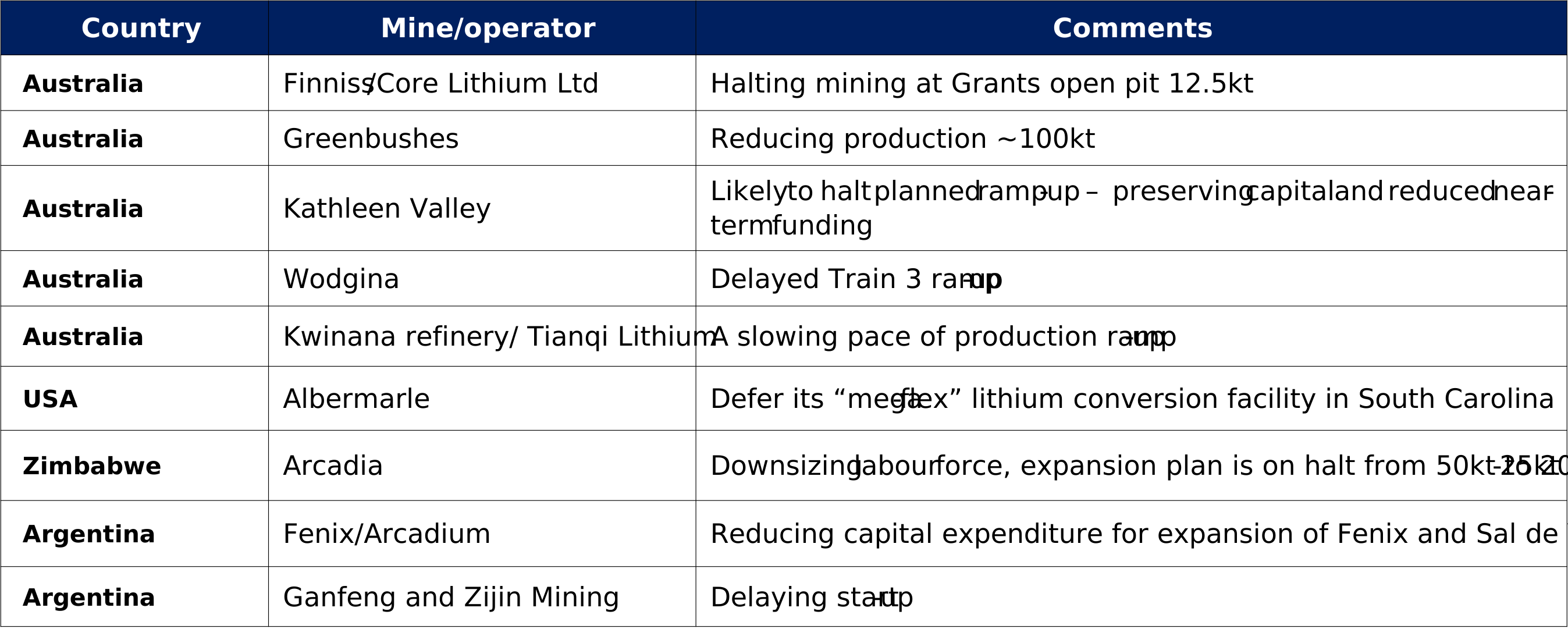
Lithium prices have nosedived from a high of $85,000 per ton in late 2022 to under $12,000 per ton. This dramatic drop came from a quick boost in supply paired with a steadying of electric vehicle (EV) sales growth. As the market adapts to these shifts, producers with high costs are getting pushed out leading to a needed reset of supply.
The lithium market will experience big swings from 2020 to 2028. Shortages rule from 2020 to 2023 then a surplus takes over from 2024 to 2027 showing improved supply. But by 2028, a big shortage comes back. This up-and-down pattern shows how unstable the market is and the ongoing supply issues.
Supply Adjustments:
- High-Cost Producers Exit: The sharp drop in prices makes it hard for expensive miners and processors to keep working. As a result, these producers are leaving the market or putting off new projects. This change helps balance the market by cutting the extra supply that's been pushing prices down.
- Geographical Concentration: The lithium supply chain is in a few places. Australia and Chile lead in mining, while China runs 70% of the later stages, like refining and making batteries. This setup means the market can face big risks if something goes wrong in these countries.
- Global Refining Capacity: In 2023, the world's refined lithium supply went over 1,000kt because China grew so much. China alone more than doubled its refining ability reaching 600kt of Lithium Carbonate Equivalent (LCE).
Demand Drivers: Electrification and Energy Transition
Even supply adjustments are not going to dampen the outlook for lithium demand, given the continuous electrification in the transport sector and a large, wider energy transition.
- Growth in EV Market: Global EV sales are likely to reach as high as 45.5 million units by 2030 at an average annual growth rate of 18%. This growth has acted as a key driver for lithium demand.
- Energy Storage: This impetus for energy transition increases the demand for lithium-ion batteries, focused on renewable energy sources. These batteries are, of course, important to EVs, who share potential grid energy storage applications.
Geopolitical and Economic Factors
Geopolitical and economic factors are also putting an impact on the lithium market, building up its different dimensions of complexity in its dynamics.
- Geopolitical Risks:
- China’s Dominance: China’s control over lithium refining and battery manufacturing is creating vulnerabilities, especially amid escalating trade tensions with the US and Europe. Any disruptions in China's supply chain could have global repercussions.
- Tariffs and Trade Policies: The US and Europe recently imposed tariffs and trade policies primarily on Chinese imports; these can be expected to impact the cost and availability of lithium and lithium-ion batteries, therefore further complicating the supply chains
- Economic Policies:
- Resource Nationalism in Chile: Chile, the second-largest lithium producer, enacted policies that open avenues for state control over lithium projects and adoptions of water-efficient extraction techniques. This will slow down supply growth but is instrumental for sustainable mining practices.
- Domestic Production Initiatives: The U.S. and Europe are promoting more lithium domestic production and refining, less dependence on Chinese imports, and dramatic changes could soon engulf global supply chains.
Market Outlook: Price Stabilization and Investment Opportunities
- Price Stabilization:
- Expected Price Rise: Lithium prices will be supported and increased to USD 16,000–18,000 per ton by 2025, considering high-cost producers' exit and supply adjustments likely to occur. The current oversupply is not large enough to restrain prices from the strong outlook in demand.
- Supply-Demand Balance: Although near-term market balance suggests a slim surplus, the aggregate market suggests that prices might stabilize through supply catching up with strong demand.
- Investment Opportunities:
- Exploring Untapped Resources: It is imperative for investors to be involved more in virgin lithium resources, especially in countries with friendly regulations such as Latin America and Africa.
- Cost Optimization and Innovation: Corporations with a system of cost optimization and innovative extraction techniques will make gains competitively. This market, already at stabilizing but not surging prices, will need more efficient methods of extraction and cost control.
Conclusion
The lithium market currently is in a state of turbulence. The recent collapse in prices has been necessary to adjust supplies in the short term, but there is no reason to doubt the strong outlook for long-term demand. Careful thought, therefore, must be given into tariff geopolitical and economic tectonics now at play in the formation of this market for any investor and for a good level of awareness of new developments. Demand from lithium will keep appearing with the world moving progressively toward a low-carbon economy, offering significant potential opportunities for strategic investments.
Discover the Lean Advantage: Offshore Insight Onshore Impact
Lean Research enhances your investment strategy by delegating the detailed grunt work to our offshore analysts, freeing your onshore teams to focus on high-value tasks. With our dedicated full-time members embedded in your operations, we ensure that every piece of analysis not only meets but exceeds your standards. Experience the ease of expanding into new markets and asset classes while driving better investment returns, all in a cost-efficient manner. Lean Research is your partner in redefining asset management efficiency.