
US Asset Monetization & Gold Revaluation: Treasury’s Plan Explained
Is the U.S. Treasury monetizing assets? Explore potential strategies, including PP&E sales, GSE privatization, and gold revaluation. Understand the financial, legal, and market implications of Secretary Bessent’s statement on U.S. asset monetization.
Bessent Opens Door to US Asset Monetization: A Deep Dive
On February 3, U.S. Treasury Secretary Bessent made a notable statement: "Within the next 12 months, we are going to monetize the asset side of the U.S. balance sheet." This comment, made in the context of government funding for a new sovereign wealth fund (SWF), has sparked discussions about potential non-traditional Treasury funding options. While details remain unclear, we assess possible avenues for asset monetization and place low odds on near-term action.
Understanding the US Government Balance Sheet
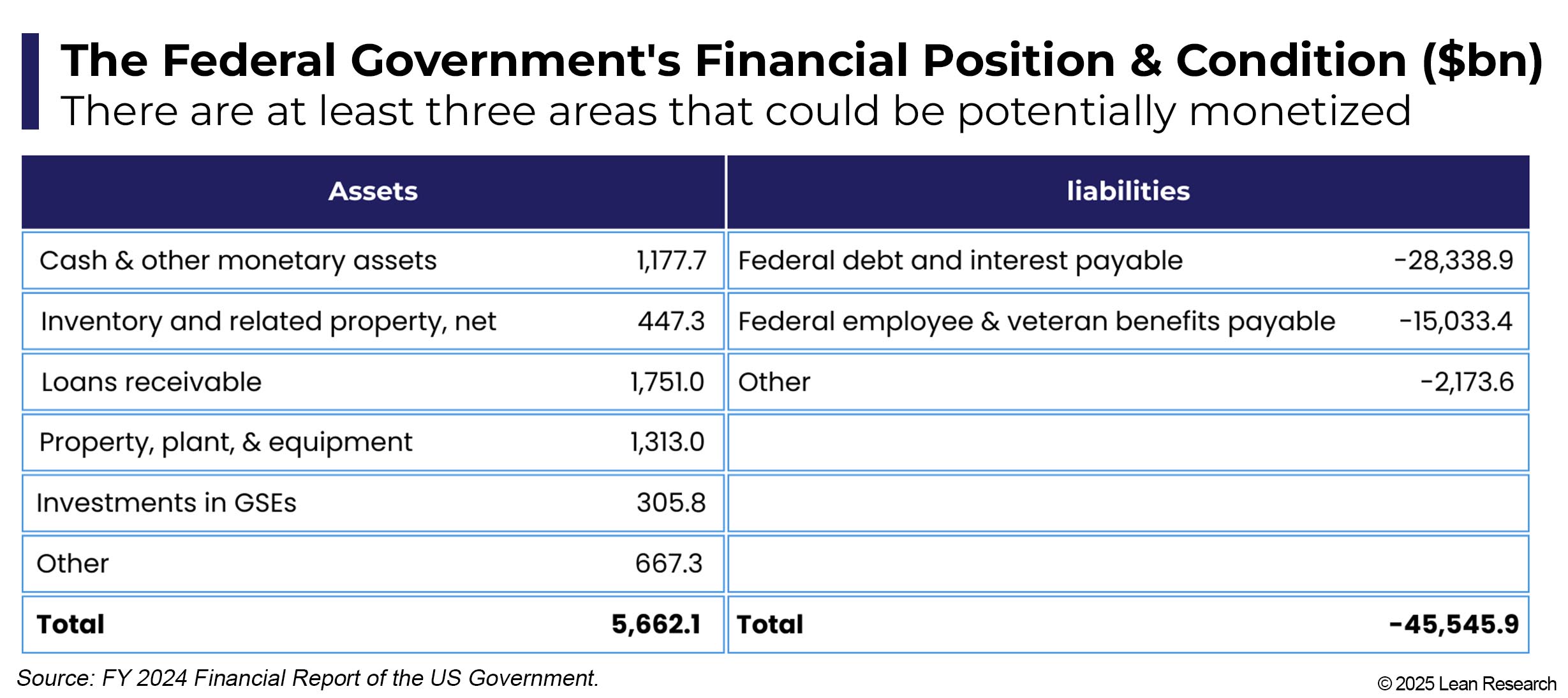
Government balance sheets differ significantly from corporate or household accounting structures. According to the U.S. Treasury, the federal government reports $5.7 trillion in assets against $45.5 trillion in liabilities—a staggering imbalance. However, this does not account for the government's sovereign powers, such as taxation and regulatory authority, which effectively act as implicit assets. This unique structure complicates any monetization strategy.
Three Potential Avenues for US Asset Monetization
While the specifics of Bessent’s plan remain undisclosed, we identify three broad asset classes that could theoretically be monetized:
1. PP&E Monetization: Unlikely Given National Security & Legislative Barriers
The U.S. government holds over $1.3 trillion in PP&E assets, primarily comprised of land, buildings, and infrastructure. The Department of Defense (DoD) alone controls approximately 64.7% of these holdings, excluding 22.8 million acres of federally managed land.
While selling off PP&E could generate revenue, the national security implications, DoD involvement, and Congressional oversight requirements make it unlikely. Furthermore, asset sales do not necessarily reduce budget deficits unless the proceeds exceed the costs of replacing the disposed assets. The Congressional Budget Office (CBO) would likely evaluate any proposed sales to determine net fiscal impact.
2. Fannie Mae & Freddie Mac: Privatization Challenges
A more feasible option is selling government stakes in GSEs (Govt. sector undertakings) like Fannie Mae and Freddie Mac. As of FY 2024, the U.S. government holds $339 billion in senior preferred stock in these entities.
Privatization could unlock capital for the government, but it presents structural challenges, particularly regarding mortgage guarantees. The mortgage market relies on government backing for stability, and transitioning Fannie and Freddie to private ownership could result in higher mortgage rates. Additionally, given the complexity of privatization, this process would likely take over 12 months—longer than the timeline implied in Bessent’s statement.
3. Gold Re-Marking: A Potentially Disruptive Move
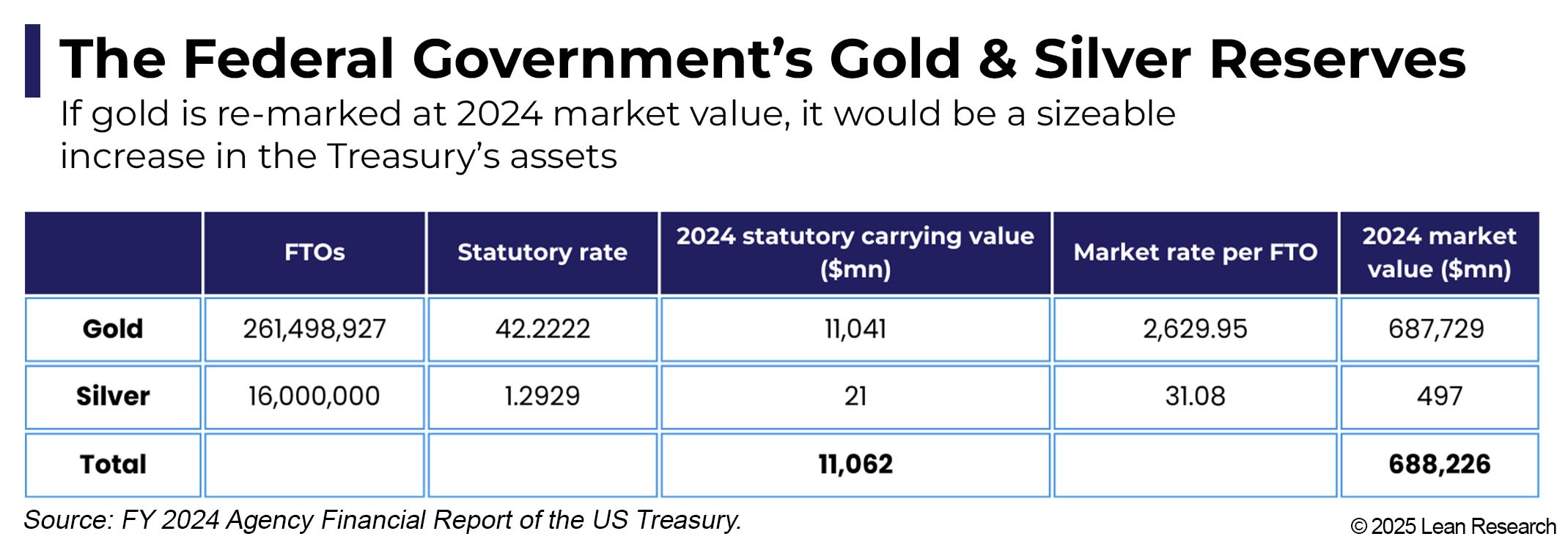
The most discussed monetization avenue involves re-marking the U.S. gold reserves. Currently, the U.S. government holds $11.1 billion in gold and silver, valued at a statutory rate of $42.22 per fine troy ounce (set in 1973). However, at today’s market price, this gold would be worth approximately $688 billion—a $677 billion increase in Treasury assets.
While this move could inject significant funds into the Treasury’s balance sheet, legal and macroeconomic considerations complicate its implementation:
- Legal Framework: The value of gold certificates issued to the Federal Reserve is set by law (31 USC 5117), though there is a clause allowing the Treasury Secretary to regulate valuation with Presidential approval. It remains unclear whether this authority extends to a broad re-marking of gold reserves.
- Federal Reserve Impact: A gold re-marking would expand both the Treasury and Federal Reserve balance sheets, resembling quantitative easing (QE) without open market purchases. This could inject excess cash into the banking system, influence inflation, and challenge perceptions of fiscal and monetary policy independence.
- Market Reactions: A gold re-marking could be perceived as an unconventional monetary tool, raising concerns about inflation, excess liquidity, and government overreach. Such a move has not been undertaken for decades, likely due to fears of market instability and unintended fiscal consequences.
Potential Market Impacts of Gold Re-Marking
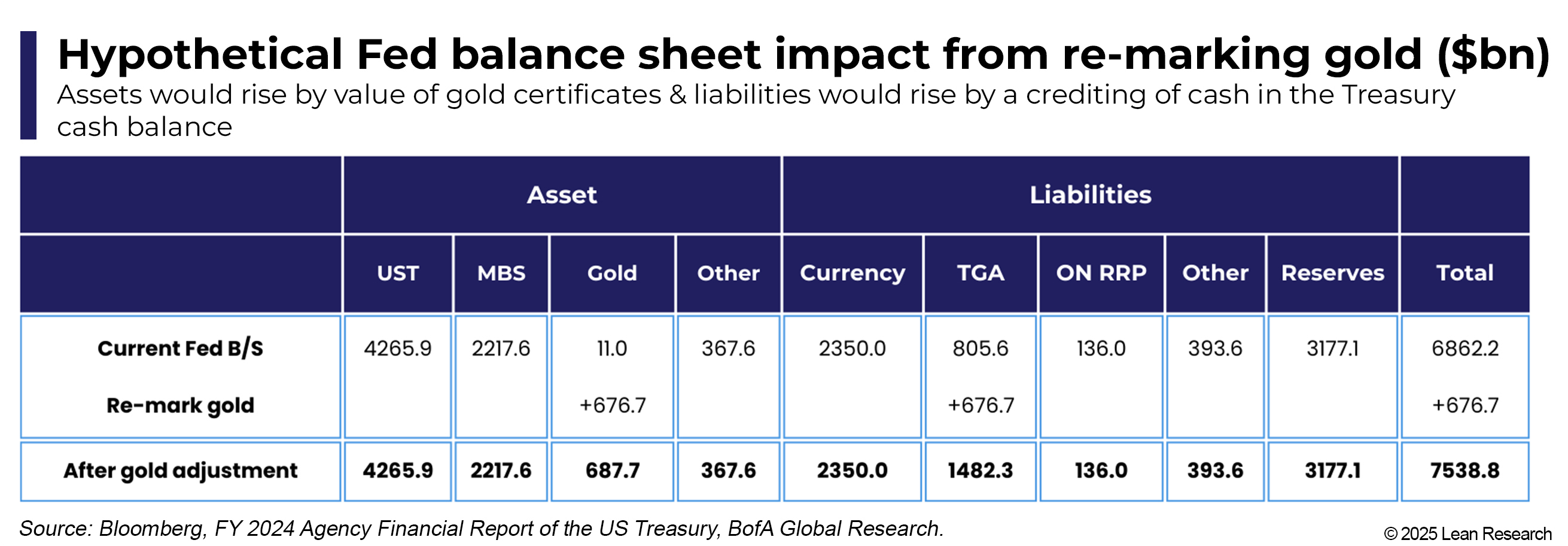
Should the U.S. Treasury pursue gold re-marking, we anticipate several financial market reactions:
- Front-end spread widening: More liquidity in the financial system could lead to short-term rate fluctuations.
- Flatter swap spread curve: Market skepticism around fiscal-monetary independence could weigh on long-term spreads.
- Higher breakevens: Increased fiscal spending capacity might elevate inflation expectations.
- Debt ceiling extension: New sources of government funding could delay the need for additional debt issuance.
Conclusion: Low Odds of Near-Term Monetization
Despite Secretary Bessent’s comments, we see limited near-term likelihood of major U.S. asset monetization. Any meaningful action—whether through PP&E sales, GSE privatization, or gold re-marking—would require significant public discourse and likely Congressional approval. While incremental PP&E sales could occur, they would generate limited proceeds. Fannie and Freddie privatization remains a long-term possibility but poses structural challenges. Gold re-marking, though theoretically possible, would introduce substantial macroeconomic risks and policy concerns.
For now, we await further details from the Treasury before reassessing the probability of U.S. asset monetization.
Discover the Lean Advantage: Offshore Insight Onshore Impact
Lean Research enhances your investment strategy by delegating the detailed grunt work to our offshore analysts, freeing your onshore teams to focus on high-value tasks. With our dedicated full-time members embedded in your operations, we ensure that every piece of analysis not only meets but exceeds your standards. Experience the ease of expanding into new markets and asset classes while driving better investment returns, all in a cost-efficient manner. Lean Research is your partner in redefining asset management efficiency.