
The Future of Oil in 2025 Supply Demand and Market Insights
Understanding the 2025 Oil Surplus and Market Trends
Going into 2025, the international oil market is expected to see an excess of 1.3 million barrels per day (mb/d). This surplus is caused by slowing demand growth, resilient non-OPEC supply, and cautious OPEC+ policy adjustments. Economic slowdowns in the major consuming regions and structural shifts in energy consumption and the resolute emergence of new producers underpin this scenario, complicated by capacity constraints in the refining sector and additional price pressure.
This blog examines these themes-cracking open regional trends, corporate strategies, and market transitions-to inform strategic investment decisions by investment professionals.
Demand Dynamics: A Structural and Regional Perspective
Global Revisions and Their Impact
Demand growth for 2024 and 2025 has been revised downward to 0.8 mb/d and 0.95 mb/d, respectively, both reflecting ongoing economic challenges, as well as shifting energy usage. The base case numbers now stand at 0.4 mb/d below those of the original forecast, serving to accentuate the persistent drags on the oil market.
China: The Largest Contributor to the Shortfall
China's apparent demand fell by more than 1 mb/d y-o-y in September 2024, and China played a significant role in that weakness in global demand. Among other factors:
- Economic Challenges: Low industrial production and slow real estate activities have been linked to lower demand for diesel and other refined products.
- Energy Transition: Rising demand for LNG trucking and electric vehicles is driving structural change away from more traditional oil use.
Implications also extend beyond China. There's Saudi Arabia which relies so much on Chinese demand, and reduced export volumes have cut their revenue projections.
United States: Modest but Meaningful Declines
- Industrial Slowdowns: Weak manufacturing production is decreasing energy demand.
- Refinery Throughput: Gulf Coast refiners, which are important U.S. crude processors, are processing less crude than capacity due to diminished demand for domestic and export products.
U.S. demand weakness is more severe than in any other country, excepting China. The loss is further magnified by a rapidly improving energy productivity and increasing penetration of renewables.
Broader OECD and Non-OECD Trends
Demand is still weak in OECD economies such as Japan and Europe but is kept alive by policy-driven transitions to energy sources. In non-OECD regions, long-time robust drivers of demand in their economies are slowing down economically and slow industrial expansions that lower the contribution to growth.
Supply-Side Resilience: Regional Growth and Corporate Strategies
Brazil and Guyana: Leading the Non-OPEC Expansion
Non-OPEC supply growth, projected at 1.6 mb/d in 2025, is anchored by Brazil and Guyana:
- Brazil: Petrobras has fully extracted the pre-salt reserves and is maximizing with advanced offshore technologies and is using it to better efficiency for productions. These investments place Brazil firmly as a significant low-cost, high-quality crude supplier.
- Guyana: ExxonMobil and its coventurers are quickly ramping up production from the Stabroek Block. Output is likely to top 1.2 mb/d in 2025, and Guyana will become an important contributor to global markets, with competitive breakeven costs and high crude quality
U.S. Shale: Maturity and Plateauing Growth
While U.S. production remains significant, growth is slowing:
- Onshore Plateau: Estimated 270 kb/d of onshore production by 2025, represents a natural maturation of key shale plays.
- Offshore Gains: Forcing a rapidly growing outcome onshore with significant offsets from the US Gulf of Mexico-120 kb/d.
US Major Pioneer Natural Resources and Devon Energy currently prefer capital discipline rather than forced aggressive expansion, again reflecting changes in corporate strategies
OPEC’s Controlled Output Strategy
OPEC’s approach remains cautious, with key adjustments including:
- Extension of Cuts: Voluntary cuts of 2.2 mb/d are locked in until the end of 2024.
- Iraq’s Compliance Increased compliance with its quota has cut Iraqi output by 0.1 mb/d.
- Iran’s Export Declines Iranian exports have flattened out since peaking mid-2024, and thereby modestly tightened supply.
Despite these measures, OPEC’s ability to influence market dynamics is constrained by the resilience of non-OPEC supply.
Refining Sector Challenges: Capacity Constraints and Demand Shifts
The global refining capacity trend from 2019 to the end of 2025, based on atmospheric distillation (measured in mb/d). Refining capacity started at 94.5 mb/d in 2019, followed by net declines in 2020 (-0.5 mb/d) and 2021 (-0.2 mb/d), primarily due to refinery closures and reduced investments. However, capacity began recovering in 2022 (+0.7 mb/d), accelerating in 2023 (+1.3 mb/d) and 2024 (+0.9 mb/d) due to new projects and expansions. A slight contraction of 0.2 mb/d is expected in 2025 before a sharp rebound to 96.5 mb/d by the end of the year, signaling a net increase of 2 mb/d over the period. This reflects a wave of new refinery startups offsetting previous closures, meeting growing global demand.
Refining Closures and Regional Dynamics
Global refining capacity is being squeezed, with 1.6 mb/d of closures announced for 2025. Key trends include:
- Europe: Weak regional demand combined with poor refining margins is reflected in declining crude imports and reduced refinery runs. The switch to cleaner fuels continues to put immense pressure on European refiners.
- Asia: While the bulk of Chinese refining capacity is expanding, it increasingly faces surplus-refined products and weakening domestic demand, as utilization rates are falling.
These changes are generating a challenging environment for producers of crudes whose capacity is less to be processed in some grades.
Implications for Producers and Traders
As refiners increasingly favor lighter, sweeter crude grades, those producing the heavier grades face pricing and marketing challenges. The widening differential in pricing between grades points to an ongoing need for producers to adapt to preference changes in a market.
Pricing and Market Structure: Contango and Volatility
Price Forecasts and Inventory Dynamics
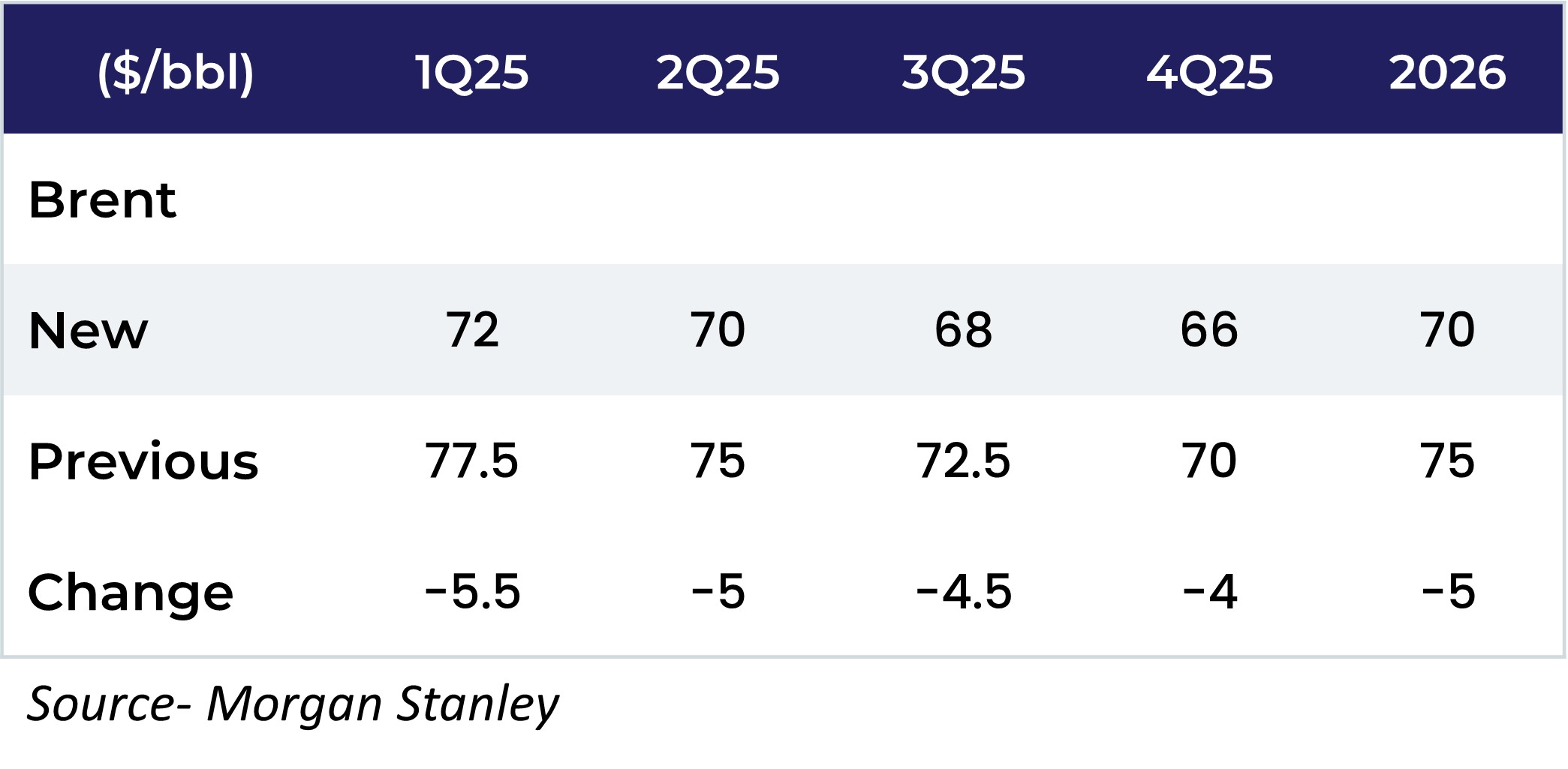
Brent crude prices are now seen averaging at $66/bbl as of late 2025, down from the previous prognosis in the $70–$77/bbl range. The turn into a contango structure, where future prices exceed spot prices, reflects expectations of rising inventories because supply is outpacing demand.
Risk Factors
- Geopolitical Risk: Renewed U.S. sanctions on Iran or disruptions in Middle Eastern production could cause prices to spike once again.
- Energy Transition: The faster pace of uptake in renewables and efficiency programs could continue to depress the demand, therefore extending the surplus.
Strategic Implications for Industry Stakeholders
OPEC+ Policy: A Delicate Balancing Act
On the market-share front, OPEC+ faces the challenge of the price-stabilisation trade-off. A decision by the bloc at its December 2024 meeting would have a remarkable bearing on market dynamics.
Investment in Emerging Producers
Brazil and Guyana present attractive opportunities for investment to any investor. Regional leaders ExxonMobil and Petrobras are well-positioned due to their footprint in these growth economies, but stability of their regions, together with investment, will unlock growth potential.
Adapting to Refining Dynamics
Refiners must appreciate flexibility with improvements in processing technologies and strategic agreements with producers to meet the unfolding market dynamics.
Conclusion: Preparing for a New Era in Oil Markets
The global oil market will be defined by the interplay between demand softness, resilient non-OPEC supply and challenges in the refining sector in 2025. Some of the key takeaways include:
- Demand Weakness: Both cyclical and structural elements will weigh down oil consumption around the globe, especially in China and the U.S.
- Non-OPEC Growth: Supply growth is being led by new emergence producers in Brazil and Guyana, and more besides, and they are changing the complexion of the market.
- Refining Pressures: Crude preferences and pricing are changing due to declining capacity and weak margins.
- Price Outlook: Brent prices are likely to remain subdued, with risks skewed to the downside.
For industry stakeholders, a new chapter needs to be marked by agility, data-driven insights, and strategic investments as stakeholders navigate this evolving landscape. Knowing regional and corporate dynamics, refining transitions, and geopolitical risks would further help position stakeholders for success in the market's intricacies and competition.
Discover the Lean Advantage: Offshore Insight Onshore Impact
Lean Research enhances your investment strategy by delegating the detailed grunt work to our offshore analysts, freeing your onshore teams to focus on high-value tasks. With our dedicated full-time members embedded in your operations, we ensure that every piece of analysis not only meets but exceeds your standards. Experience the ease of expanding into new markets and asset classes while driving better investment returns, all in a cost-efficient manner. Lean Research is your partner in redefining asset management efficiency.