The Future of Nuclear Power: Analyzing Its Global Comeback in 2025 and Beyond
Introduction: Why Nuclear Energy is Back in the Spotlight
The race to zero emissions by 2050 has changed our view of energy, with nuclear being reintroduced back into the discussion. Renewable energy options like solar and wind energy often steal the spotlight, but renewable and green energy generation can be hit-or-miss. Nuclear energy is available nearly continuously, low-carbon, and is a stable source of energy 24/7. As the world continues to transition much of our daily lives and industry to all electric, the consistency of nuclear energy supply is a needed backstop for energy grid management.
Recent world events—like worries about energy safety after Russia attacked Ukraine—and weak supply chains have made nuclear even more important. New laws, like the U.S. Inflation Reduction Act with its targeted benefits and promises at COP28 to make nuclear power three times bigger by 2050, show that governments are backing nuclear again.
For big investors, this means they can see clearer paths to invest money, get support from rules, and tap into long-term growth in demand. This makes nuclear a strong sector that fits with both green goals and steady cash flow. All this sets up the chance to look deeper at how the basics of this sector are changing.
Global Nuclear Capacity and Growth Outlook
The global nuclear fleet currently comprises approximately 440 operable reactors, concentrated primarily in ten countries that account for 80% of installed capacity. The problem is that all these reactors are old, and the average age of these reactors is over 30 years which leads to complexities in operations and maintenance. Despite this, nuclear generation remains stable, providing about 9% of global electricity as of 2023, with higher shares in markets such as the U.S. (18%) and France (70%).
Going forward, the sector has many options for growth relative to the many ongoing reactor construction pipelines and life extension advanced planning. We have about 60 reactors under construction across the globe with the majority in China, that has declared a goal to build over 6GW of nuclear capacity a year to reach a stated goal of 200GW of nuclear capacity by 2035. In addition to the current under construction, there are 85 prospective reactors planned and over 350 proposed (in total a many decade expansion), with the additional note that 31 countries have made a COP29 commitment to triple global nuclear capacity by 2050.
These figures highlight a promising growth trajectory, supported by ongoing capital expenditure, revitalized supply chains, and rising demand for both fuel and services. As such, nuclear energy is reemerging as a strategic asset with long-term growth prospects.
Macro Drivers and Regulatory Environment
The revival of nuclear energy is driven by a combination of macroeconomic and regulatory factors, which make the industry much more visible and investable. The largest of these factors is the push to rapidly decarbonize power generation to meet aggressive climate goals under net-zero commitments, where nuclear's zero-carbon electricity production situates it alongside renewables as the key building block technology. Additionally, renewed energy security concerns because of recent geopolitical events (most notably Russia's invasion of Ukraine) have pushed governments to review how to diversify energy sources and lessen reliance on erratic fossil fuel prices.
The regulatory landscape is beginning to reflect this shift. An example of proactive policy supported by governments is embodied in the U.S. Inflation Reduction Act (IRA) which provides large tax credits in terms of a new production and investment tax total credits of $25/MWh for new nuclear projects in its first 10 years as well as substantial funds for developing advanced reactor R&D and HALEU fuel supply. There are programs around the world that include similar strategic initiatives, especially in Europe, where officials have worked to amend certain taxonomy regulations to allow nuclear to be classified as sustainable when built to certain standards. The clearer policy landscape helps remove historically entrenched regulatory and financing risks, lower the cost of capital to invest, and opens the door wider for capital-intensive nuclear investments. For institutional investors, the sector now appears more digestible for their capital and provides improved risk-adjusted returns.
Structural Shifts Shaping the Sector
The nuclear energy industry is undergoing transformational change marked by technological advancements and evolving market engagement. It is important to emphasize that a major structural change is taking place - Small Modular Reactors (SMR) and advanced reactor forms - developed to mitigate nuclear development's inherent challenges of capital intensity, long construction time and regulatory hurdles. SMRs produce power typically in the 20 to 300 MW range, and through modular, factory-built components, this property has a potential to leverage reduction in project risk, reductions in upfront capital, and potentially even can be deployed in geographically diverse locations such as industrial locations or smaller grids o the utility space.
Additionally, advancements in fuel technology such as High-Assay Low-Enriched Uranium (HALEU) and accident-tolerant fuels - promise improved operational efficiency, safety, and longer fuel cycles. This notion of continual innovation is encouraging more private-sector engagements and investment with traditional technology firms and utilities looking at different ways to engage through strategic partnerships, equity investments and power purchase agreements related to nuclear energy. Collectively these ideas illustrate the industry moving beyond the remnants of the past, providing space for competitive differentiation and avenues for new pathways for growth.
Understanding the Risks Associated with Electric Power Technologies
As investors and stakeholders assess the nuclear sector, it's crucial to understand the risks associated with nuclear and other power technologies. While nuclear presents medium risks across various categories, it offers a more predictable and stable investment profile compared to other technologies like wind, solar PV, and battery storage.
The table below compares the risks across key power technologies, highlighting the relative risk levels in areas like regulatory frameworks, supply chain dependencies, and financial concerns:
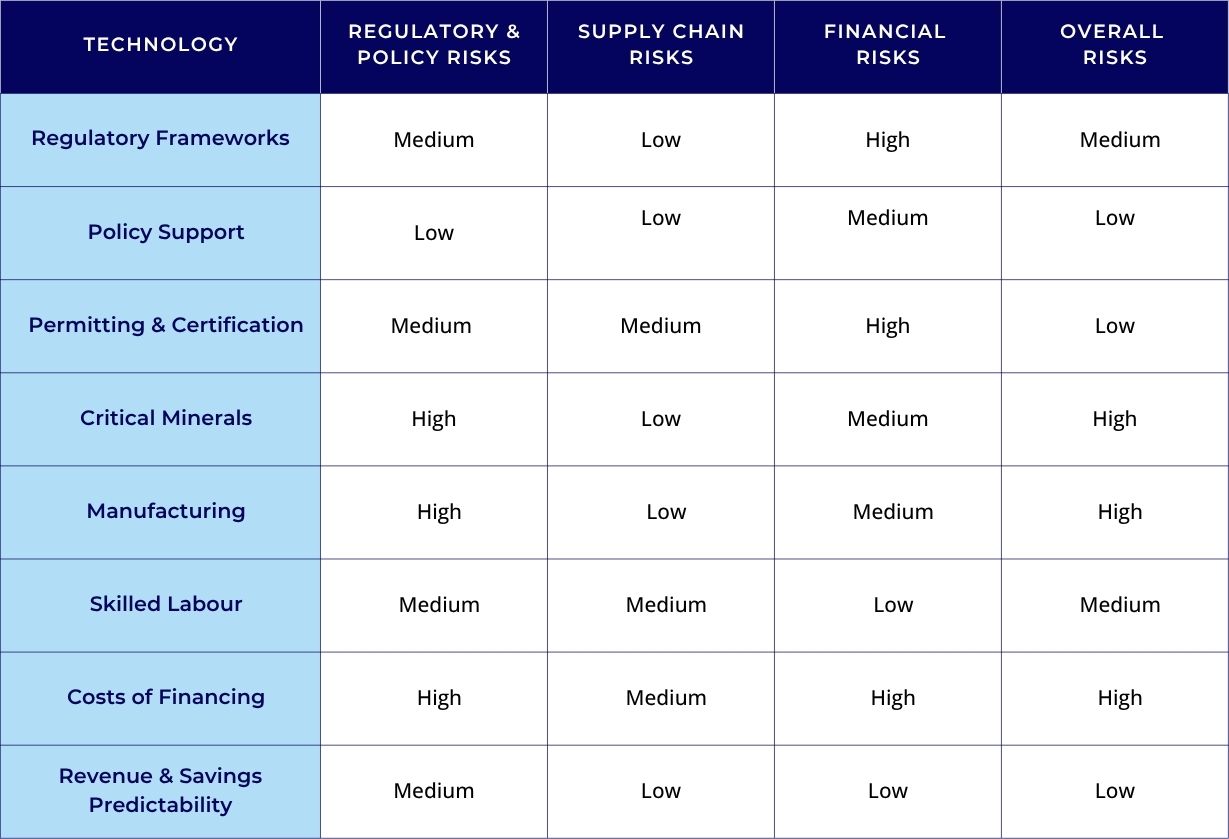
Nuclear stands out for its balanced risk profile, especially in areas of regulatory framework stability and financial predictability. While the sector does face challenges related to manufacturing and financing costs, the regulatory and policy support provided in many regions can help mitigate these risks over time.
Mineral Demand and Nuclear’s Moderate Material Footprint
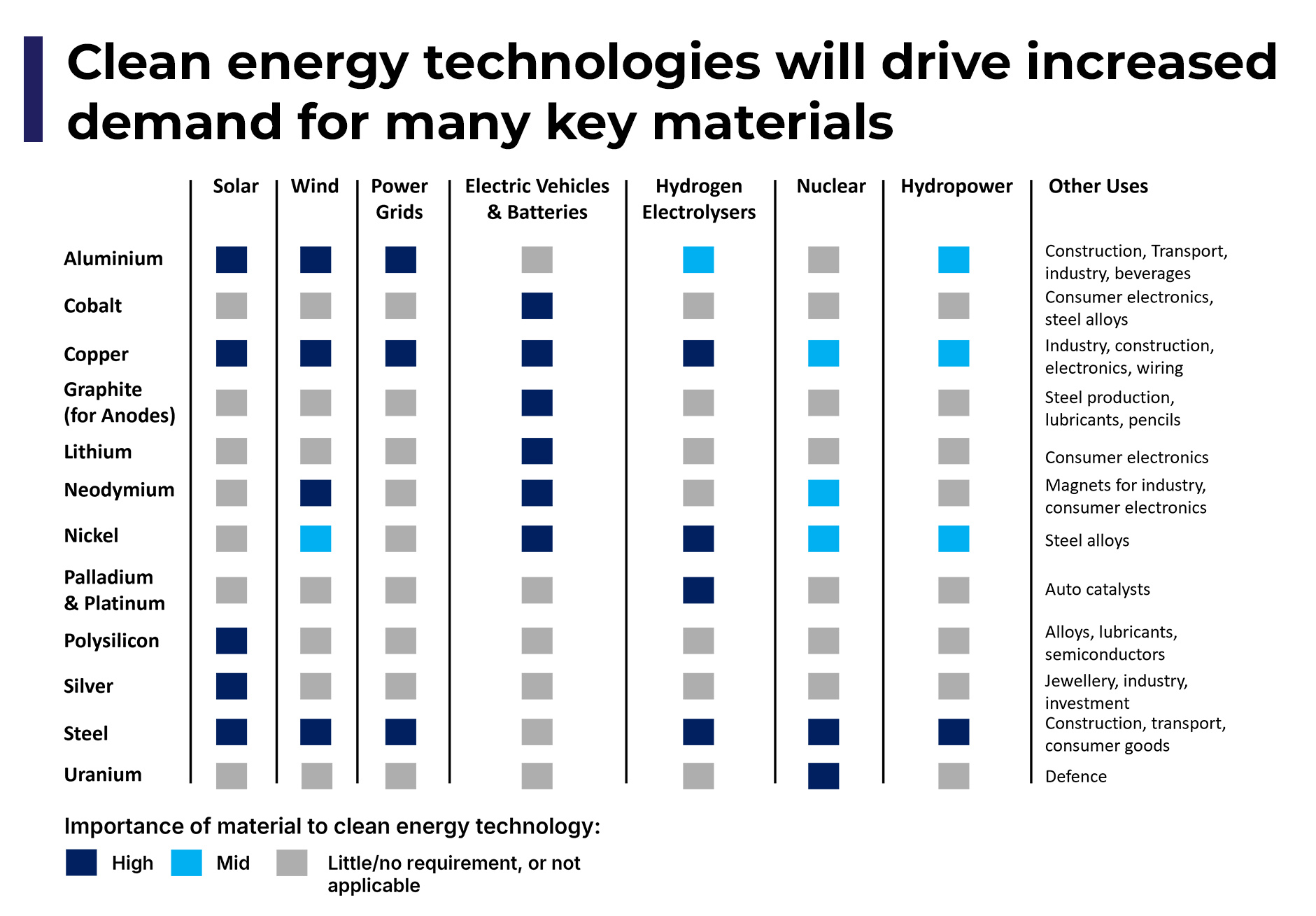
As clean energy technologies scale, their demand for critical materials is intensifying. Technologies like solar, wind, electric vehicles, and battery storage rely heavily on minerals such as cobalt, lithium, and rare earth elements. In contrast, nuclear energy maintains a moderate material footprint. Its key dependencies include copper, nickel, steel, and uranium, but it requires little to no input of materials like lithium, cobalt, or neodymium—minerals that are facing high demand pressures from other technologies.
Looking Ahead: Fueling Nuclear’s Growth — The Critical Role of Uranium
With nuclear energy regaining its place within clean energy transition, the narrative of supply, availability, security and cost of nuclear fuel has never been so critical to the industry's growth story. Uranium — the base feed-stock for nuclear reactors, and the fuel cycle more broadly, is the basis of operational viability and a project’s economics. In the next chapter of this series we will dig into the intricacies of the uranium market, outline the supply-and-demand fundamentals and geopolitical risks, and discuss the complex fuel cycle infrastructure fueling not only conventional reactors, but also the emerging advanced technologies. It is critical that we understand upstream factors to assess long-term investment opportunities and identify critical value drivers in the wider nuclear ecosystem. Stay tuned as we unpack the complex but compelling story behind the world’s nuclear fuel supply.
As we have seen, nuclear energy is regaining its position as a stable and reliable source of power. But to fully understand its future viability, it's crucial to dive deeper into the supply dynamics and the nuclear fuel cycle that drives this sector. In the next part of this series, we will take a closer look at the complex nuclear fuel cycle, examining uranium’s role, the supply constraints, and the market dynamics shaping investment opportunities.
Read Part 2: The Nuclear Fuel Cycle: Market Dynamics, Supply Constraints & Investment Outlook
Discover the Lean Advantage: Offshore Insight Onshore Impact
Lean Research enhances your investment strategy by delegating the detailed grunt work to our offshore analysts, freeing your onshore teams to focus on high-value tasks. With our dedicated full-time members embedded in your operations, we ensure that every piece of analysis not only meets but exceeds your standards. Experience the ease of expanding into new markets and asset classes while driving better investment returns, all in a cost-efficient manner. Lean Research is your partner in redefining asset management efficiency.