
Nuclear Fuel Cycle: Market Dynamics, Supply Constraints & Investment Outlook
The Nuclear Fuel Cycle: Supply, Demand, and Market Dynamics
The nuclear fuel cycle represents the full spectrum of the nuclear energy industry’s operations and financial performance. The nuclear fuel cycle consists of all areas from uranium extraction, fuel fabrication, reactor operation, and used fuel management. With the overall deployment of nuclear reactors growing and new advanced reactor technologies emerging, there are critical aspects of the fuel cycle that investors should be aware of in terms of supply constraints, cost drivers and margin pressures.
Uranium - the primary fuel used in nuclear reactors operates in a complicated market, with uranium production concentrated in only a handful of countries, new enrichment technologies being developed, and limited capacity for conversion and fabrication. Geopolitical events, regulation, and changes in demand are all factors that constrain uranium supply chain security and price elasticity. In the following section, we take a deeper look at the fundamental elements driving uranium supply and demand, discuss upstream bottlenecks to pay attention to, and consider how each element ultimately influences pricing, contracting models, and long-term investment strategies within the nuclear fuel ecosystem.
Overview of the Nuclear Fuel Cycle
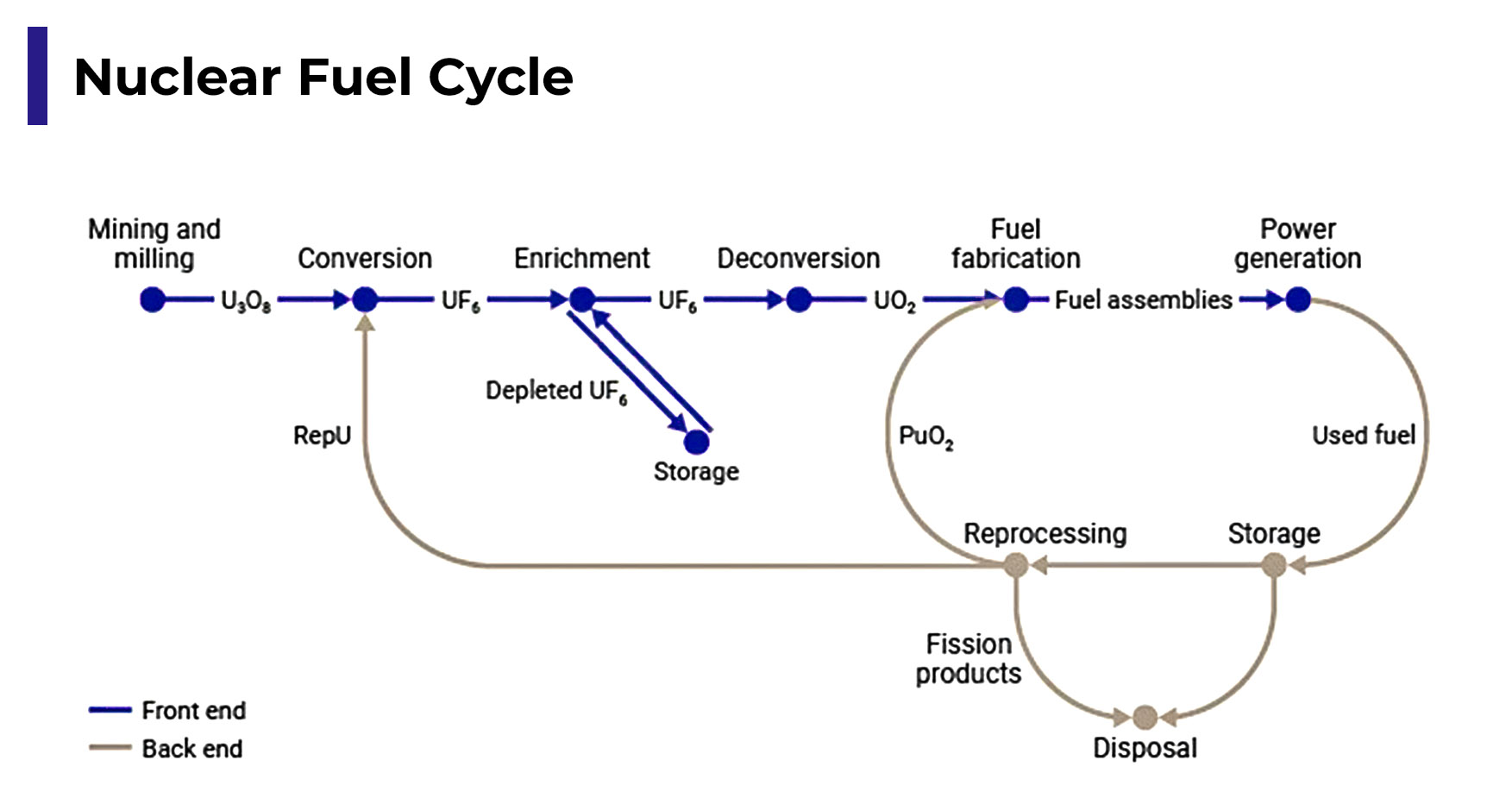
The nuclear fuel cycle is a series of interconnected stages that transform raw uranium ore into usable fuel for reactors, while managing spent fuel after it is irradiated. Each stage influences the overall supply chain, cost structures, and investment opportunities, making it essential for assessing operational risks and margin dynamics.
- Uranium Mining and Milling: Uranium ore can be obtained from either conventional open-pit or underground mining, or through in-situ recovery (ISR) which is about 60% of uranium production worldwide due to the most cost efficient. Some of the largest producers of uranium are Kazakhstan (which is by far the largest producer, accounting for about 40% of worldwide production), Canada, Australia, and Namibia. In 2023 it was estimated that Kazakhstan's ISR production with approximately 22,000 tonnes of U3O8, producing a significant geopolitical position with the long-term impact of uranium production globally.
- Conversion: The uranium concentrate (U3O8) is converted into uranium hexafluoride (UF6) gas for enrichment. The conversion portion of the supply chain is highly concentrated, with only a few sites across the globe. Current conversion capacity is approximately 62000 tonnes a year, with only metered expansion projects potential supply constraints. Additionally, any possible supply constraints in conversion capacity, if in geopolitically sensitive regions such as Russia and China, would make conversion an important aspect of the fuel supply chain.
- Enrichment: Enrichment increases the concentration of fissile U-235 isotopes, from natural levels (~0.7%), to levels needed for reactor fuel, typically 3~5% for traditional reactors, 20% (HALEU) for advanced reactors and Small Modular Reactors (SMRs). Enrichment is capital-intensive, and is subjected to licensing and regulatory processes. This is especially important for HALEU as it is increasingly in demand for new reactor technologies bringing capacity online. Enrichment capacity forms an important bottleneck. There are a few differentiators globally (e.g. Urenco, Orano, Rosatom) that control most of the enrichment offerings.
- Fuel Fabrication: The enriched uranium is then fabricated into fuel pellets, which included in rods, then in bundles, for the reactor. Magnitude of scale, specializations, and supply chains are all major constraints in the fabrication process. The company's that dominate this space include Westinghouse, Framatome, Orano, and others. Additionally, the fabrication of new reactors, especially advanced reactors using new fuel sources (TRISO & with metal alloys), will increase complexities, capital investment, and time when looking to scale.
- Reactor Operation: Once the fuel is loaded into the reactors, the nuclear fission creates heat for power generation. Reactor fuel cycles commonly run for 12~24 months. Once the run time is complete, replenishing the fuel is required for continued operations. The demand for nuclear fuel, from new reactors coming online and existing reactors being steadied, will rapidly increase.
- Used Fuel Management: Spent nuclear fuel is first kept in cooling pools until it is later transferred to dry cask storage or to be reprocessed. Reprocessing technologies are being developed but are still limited because it costs a lot and cannot keep up with spent fuel generation. Reprocessing, if ever fully developed, has the potential to recover reusable uranium and plutonium. However, given the constraints, it is not implemented on a large scale.
Uranium Supply Fundamentals
The supply of uranium is highly concentrated geographically and, due to the limited number of large-scale producers, a structurally tight market with transaction costs and geopolitical and operational risks. The uranium supply chain is also rampant with supply shortages and bottlenecks in conversion, enrichment and fuel fabrication.
Global Production and Key Players
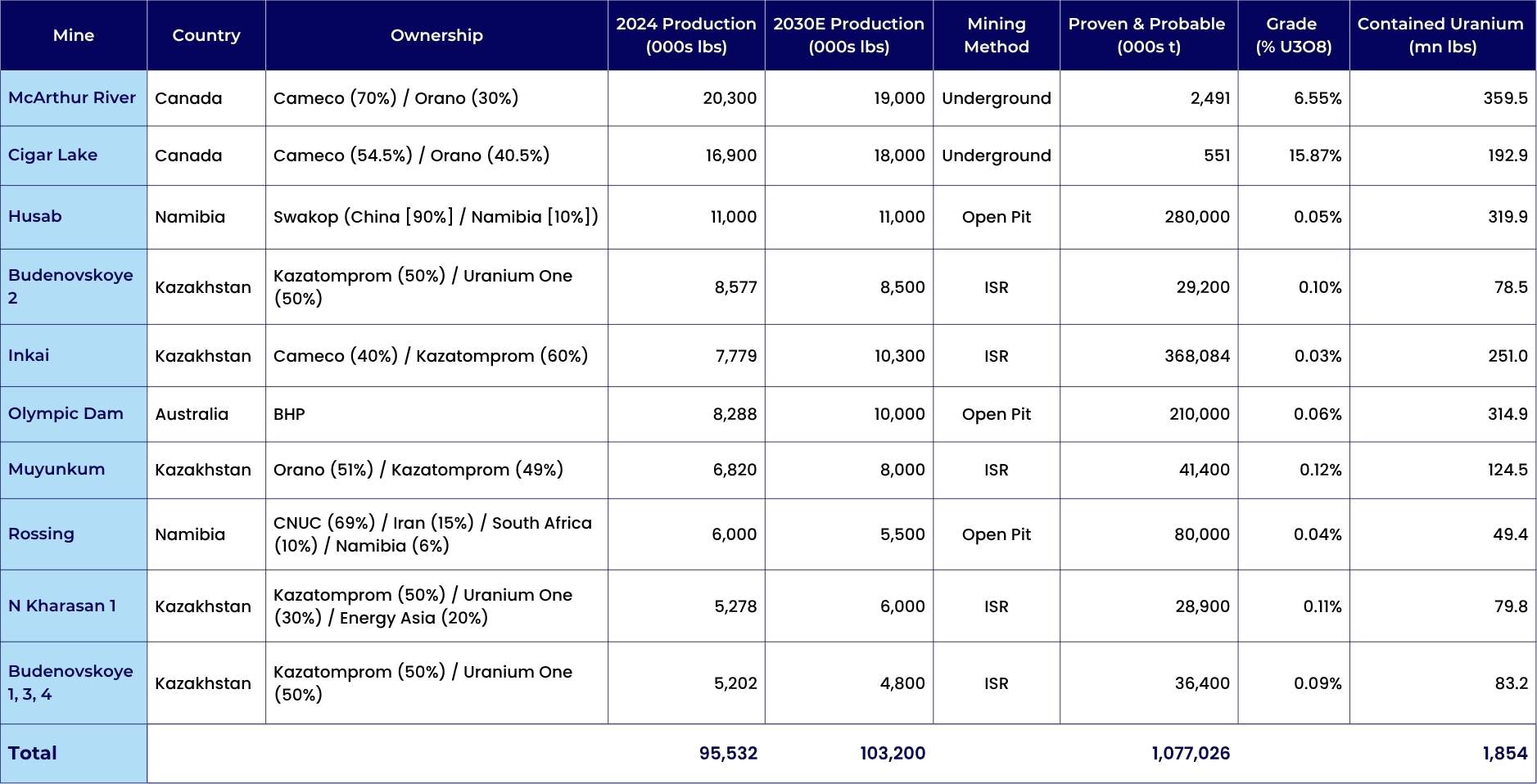
Kazakhstan is the largest producer of uranium, producing 40% of uranium worldwide. The majority of production and reserves are owned by Cameco (Canada), Orano (France), and Kazatomprom (Kazakhstan). Cameco operates the Cigar Lake mine in Canada, which is one of the highest-grade deposits of uranium in the world (Cigar Lake mine hosted the world's highest-grade uranium), and it could ramp up production if demand increases.
Mining Methods and Cost Profiles
In-situ recovery (ISR) is the most economical method of extraction, and Kazatomprom's estimated all-in-sustaining costs are about $27-$30/lb of uranium. This is significantly less than traditional mining, which can be more expensive depending on the countries (e.g., regions of declining ore grades such as the Athabasca Basin in Canada).
Geopolitical and Supply Chain Risks
The uranium supply market has a higher concentration in fewer countries—Kazakhstan, Canada, Australia, and Namibia—which is vulnerable to geopolitical instability, changing regulations and trade controls (such as export permits, etc). Furthermore, the fragmented conversion and enrichment market - specifically the emerging demand for high-assay low-enriched uranium (HALEU) fuel—is now presenting a serious risk for the greater nuclear supply chain.
Uranium Demand Drivers and Forecasts
Demand for uranium is rooted in the size and expansion of the global nuclear reactor fleet. Following climate-related imperatives and preferred alternatives to carbon-based oil energy, global uranium demand is expected to increase aggressively.
Reactor Fleet Expansion and Life Extensions
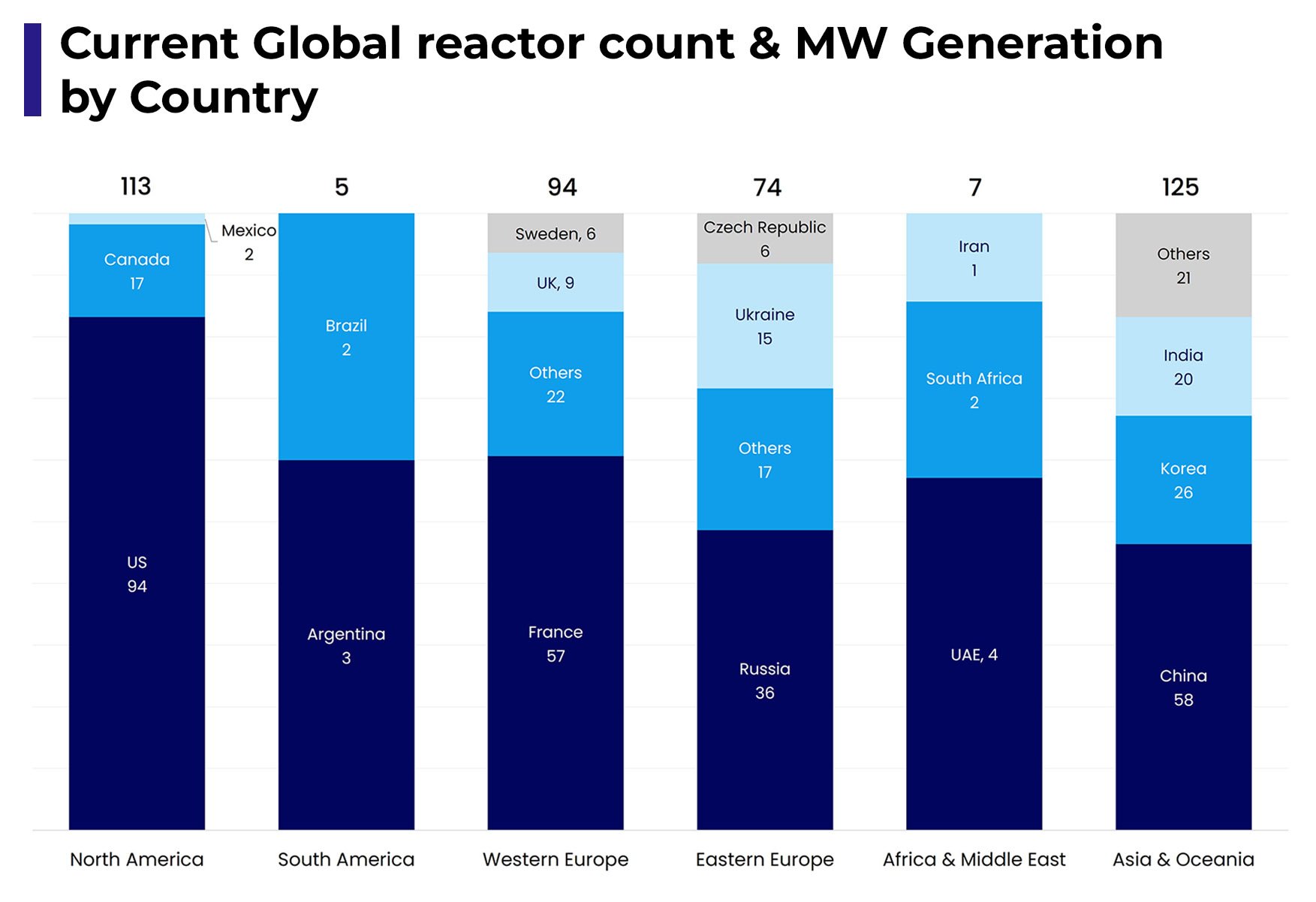
The global nuclear reactor fleet consists of roughly 440 reactors, and over 60 reactors currently under construction globally, and nations like China continue to rapidly expand their fleets (up to 200 GW by 2035 and 150 reactors by 2040). Life extension programs and uprates further add to the extent to which fuel is utilized in existing reactors.
Fuel Demand Growth
Uranium demand is expected to increase from approximately 180 million pounds of U3O8 in 2024 to greater than 320 million pounds by 2045, with this growth being driven by fleet expansion, construction of new reactors and higher efficiency in fuel usage in new reactors, encompassing an overall annualized growth rate of 3%. The near term growth in demand will be intensified with the requirements associated with the first-time loads of fuel for new reactors.
Regional Demand Drivers
Asia will be the largest demand drivers, and primarily China and India in Asia. China has targeted an increase in its nuclear fleet capacity of approximately 50 GW by 2035, which will dramatically impact the amount of uranium consumed globally. In addition, Southeast Asia has commenced its investment in nuclear energy, which will only serve to increase regional demand.
Conversion, Enrichment, and Fuel Fabrication Bottlenecks
As uranium demand increases, the downstream processes of conversion, enrichment, and fabrication of fuel assemblies are significant bottlenecks.
Conversion Capacity Constraints
The conversion process is concentrated with a small number of conversion facilities globally, near 62,000 tonnes/year in global conversion capacity, likely creating a supply chain bottleneck as uranium demand grows.
Enrichment Technology and HALEU Supply
Advanced reactors, and small modular reactors (SMRs) in particular, require high-assay low-enriched uranium, or HALEU, which is defined as uranium enriched to 20%. The capacity for HALEU production is extremely limited, and the scale-up of production faces considerable technological issues and regulatory challenges to overcome. Efforts like the U.S.-DOE HALEU program for advanced reactors is extremely critical to maintain supply-chains with HALEU supplies.
Fuel Fabrication Complexity
Fuel assembly fabrication capacity for advanced reactors is becoming more complicated. There are new fuel forms such as TRISO and fuels with metal alloys that have fabrication processes that were not large scale previously. Should these facilities scale up, this could create another bottleneck in pre-emptively providing fuel for the next generation of advanced reactors.
Uranium Pricing, Contracting Structures, and Market Dynamics
The market for uranium functions with unique pricing structure as a component of the long nuclear fuel cycle due to limited liquidity and concentrated demand. Uranium prices often experience price changes based on supply-demand expectations and transitional demand, vs long-term contracts often based price stability offered by a utility.
Spot vs. Term Markets
The spot market accounts for some 20-30% of uranium trades, but the spot market is very illiquid, and volatile. In contrast, long-term contracts is where a high proportion between 70-80% of uranium transactions in 2021, with reference to stability and security of pricing and supply to utilities to manage longer lead times for uranium production and reactor loading.
Price Drivers and Volatility
Uranium prices can be volatile, influenced by expectations of supply disruptions or surging demand. The spot market’s low liquidity amplifies these price fluctuations, while term contracts provide greater price predictability and financial security for producers and investors.
Summary and Transition
The nuclear fuel cycle is fundamental to the viability of the nuclear energy sector. Uranium’s market dynamics, including concentrated production, upstream bottlenecks, and evolving demand drivers, shape both risks and opportunities within the fuel supply chain. As global reactor fleets expand and new reactor technologies come online, the demand for uranium will continue to grow. However, limitations in conversion, enrichment, and fabrication capacity, particularly for HALEU, present significant challenges to the sector’s growth.
For investors, understanding these dynamics—along with the geopolitical risks and operational bottlenecks—will be critical in navigating the opportunities and risks within the nuclear fuel cycle. In the next part of this series, we will explore the regulatory frameworks, capital intensity, and competitive positioning that define the evolving landscape of nuclear energy investments.
Understanding the intricacies of the nuclear fuel cycle is key to unlocking the potential of nuclear energy. As the sector moves forward, the connection between uranium supply, conversion, enrichment, and fuel fabrication will be more important than ever. To gain more insights into the global nuclear energy landscape, make sure to revisit
Part 1 of this series: The Future of Nuclear Power: Analyzing Its Global Comeback in 2025 and Beyond.
Discover the Lean Advantage: Offshore Insight Onshore Impact
Lean Research enhances your investment strategy by delegating the detailed grunt work to our offshore analysts, freeing your onshore teams to focus on high-value tasks. With our dedicated full-time members embedded in your operations, we ensure that every piece of analysis not only meets but exceeds your standards. Experience the ease of expanding into new markets and asset classes while driving better investment returns, all in a cost-efficient manner. Lean Research is your partner in redefining asset management efficiency.